New Delhi, Jan 28, 2026
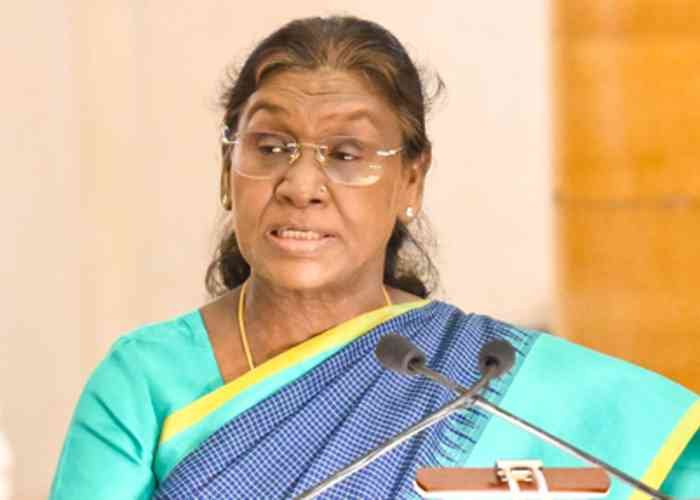
President Droupadi Murmu’s address to the joint session of Parliament on Wednesday highlighted a sweeping narrative of India’s achievements and aspirations, with women’s empowerment placed firmly at the centre of the nation’s development story.
She declared that in India’s progress, “nari shakti (women empowerment)” stands first, a sentiment that resonated through her speech as she highlighted milestones that women have achieved across diverse fields.
The President recalled with pride the historic moment when the first batch of women cadets passed out from the National Defence Academy, a breakthrough in India’s military history.
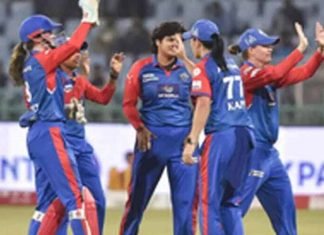
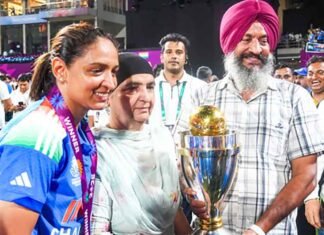
She also congratulated the Indian women’s cricket team for winning the ICC ODI World Cup and the blind women’s cricket team for clinching the T20 World Cup, describing these triumphs as symbols of women’s rising strength and visibility in sports.
President Murmu’s speech was not only about celebrating women’s achievements but also about reaffirming India’s commitment to equality and justice.
Remembering the vision of Baba Saheb Ambedkar, she said the Constitution continues to inspire the nation in the same spirit of social justice. True justice, she emphasised, means that every citizen receives their rightful share without discrimination.
Over the past decade, she noted, India has strengthened its foundations in every sector, building a system free from corruption and ensuring that every rupee is spent on development.
This, she said, has created a framework where progress is not just measured in statistics but in the lived experiences of citizens across the country.
Infrastructure and rural development featured prominently in her address.
President Murmu pointed to the Pradhan Mantri Gram Sadak Yojana, initiated by former Prime Minister Atal Bihari Vajpayee, which has added nearly 18,000 kilometres of new rural roads in the past year alone. This expansion, she said, has transformed connectivity in villages, opening up economic opportunities and strengthening social integration.
She also highlighted the establishment of 1.8 lakh Ayushman Arogya Mandirs, which have expanded healthcare access, and the issuance of Vay Vandana cards to nearly one crore senior citizens, enabling around eight lakh elderly persons to receive free hospital treatment.
These measures, she argued, reflect the government’s commitment to inclusive growth and care for the most vulnerable.
Agriculture and food security were another focus of her speech.
President Murmu celebrated India’s record foodgrain production of over 350 million tonnes, which has made the country the world’s largest rice producer.
She noted India’s position as the second-largest fish-producing nation, a reflection of success in the blue economy, and reaffirmed India’s leadership in milk production through the strength of the cooperative movement.
These achievements, she said, are not just about numbers but about ensuring that India’s farmers and rural communities are at the heart of the nation’s progress.
Turning to energy and sustainability, the President emphasised India’s rapid strides in clean power.
Alongside nuclear energy, she highlighted the installation of two million rooftop solar systems, marking significant progress in the solar sector. This, she said, reflects India’s commitment to sustainable growth and climate responsibility, ensuring that development is aligned with environmental stewardship.
President Murmu also spoke of India’s achievements in public health. She praised the Sickle Cell Anaemia Elimination Mission, under which six crore citizens have been screened, helping control the disease in tribal regions. She highlighted mission-mode campaigns that curbed Japanese Encephalitis in rural Uttar Pradesh and celebrated the World Health Organisation’s declaration of India as trachoma-free, a milestone in public health that underscores the nation’s capacity to tackle long-standing challenges.
The President underscored the government’s vision of Sabka Saath, Sabka Vikas, noting its impact on Dalits, backward classes, and tribal communities. She revealed that 95 crore Indians now have access to social security schemes, a sharp rise from 25 crore in 2014, a transformation that she described as historic in scale and impact.(Agency)
 FOLLOW NOW