
Kolkata, March 5, 2026
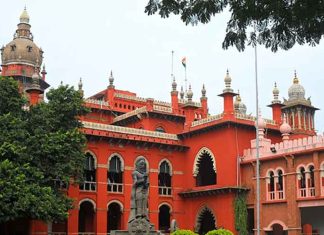
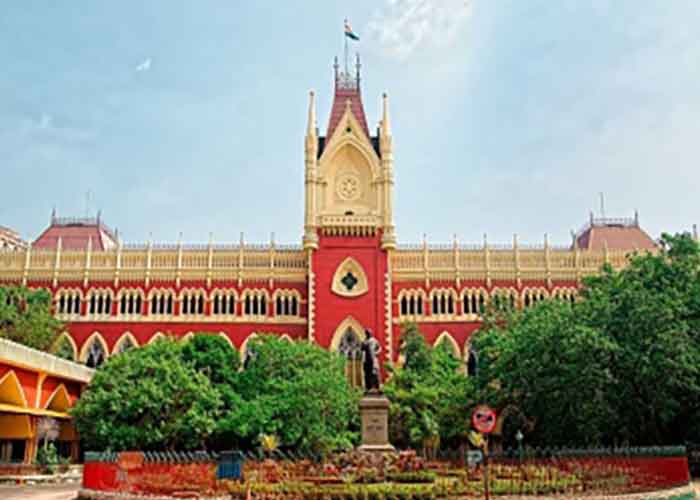
A division bench of the Calcutta High Court on Thursday questioned the admissibility of a public interest litigation (PIL) challenging the comprehensive guidelines issued by the Central government on the official protocol for the rendition of the country’s national song ‘Vande Mataram’.
The division bench of Chief Justice Sujoy Paul and Justice Partha Sarathi Sen directed the petitioner to place before the court logical evidence to establish the admissibility of the PIL.
As the matter came up for hearing on Thursday afternoon, Additional Solicitor General Ashoke Chakraborty first raised the issue of admissibility of the PIL. He argued that the public interest litigation was entirely in the self-interest of the petitioner.
“The issues like the country’s sovereignty and national security are involved with the national song of the country. Can the matter really be adjudicated by the court? The petitioner should first prove the basis of this public interest litigation. Otherwise, he should face an exemplary penalty,” Chakraborty argued.
In his counter-argument, the petitioner’s counsel Bikas Ranjan Bhattacharya, senior advocate and CPI-M Rajya Sabha member, said the main contention of the PIL was against the Union government’s instructions issued on January 20 this year to chief secretaries of all states that the complete official version of ‘Vande Mataram’, comprising six stanzas and lasting approximately three minutes and 10 seconds, is to be performed or played during major state occasions.
“In 1937, some parts of this song were accepted as universally acceptable by the first Prime Minister of India, Jawaharlal Nehru, following the advice of Gurudev Rabindranath Tagore. Later, only that portion was accorded the status of the national song. Only two paragraphs of the entire song were accepted as the national song.
It was reasoned that the words used in the remaining paragraphs could be against the communal harmony of the country. That is why Tagore suggested deleting the other paragraphs. Later, the Constituent Assembly adopted that proposal in the Indian Constitution,” Bhattacharya said in his counter-argument.
Thereafter, the division bench directed the petitioner’s counsel to present logical evidence before the court to establish the admissibility of the PIL.
The bench also observed that appropriate evidence should be placed before the court in support of the historical narratives based on which the public interest litigation was filed.
The next date of hearing in the matter has been fixed for March 23, and by that time the counsel should present the relevant evidence before the court, the bench ordered.(Agency)
 FOLLOW NOW