

New Delhi, March 13, 2026
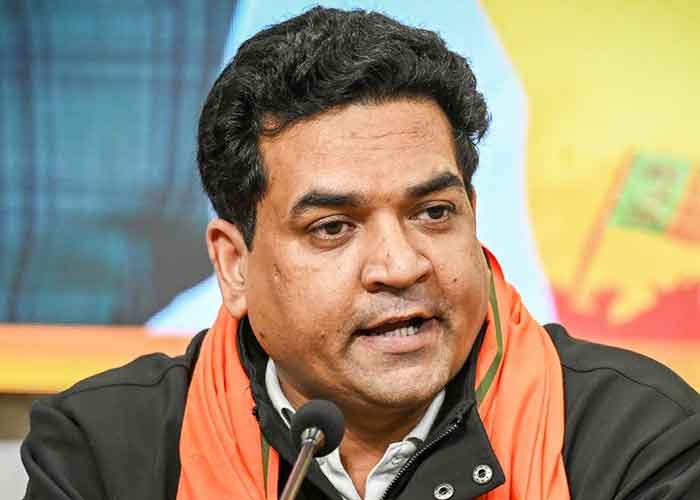
A Delhi court on Friday dismissed a plea seeking registration of an FIR against Delhi Law and Justice Minister Kapil Mishra in connection with the 2020 North-East Delhi riots.
Additional Chief Judicial Magistrate (ACJM) Ashwani Panwar of the Rouse Avenue Court rejected the application filed by Yamuna Vihar resident Mohammad Ilyas, who had sought directions to the police to register an FIR against Mishra and others over alleged incidents in Kardam Puri on February 23, 2020.
In his complaint, Ilyas claimed that he saw Mishra and some others blocking a road and destroying vendors’ carts during the riots while senior police officers were present at the spot.
The complaint alleged the involvement of Mishra in the riots and also named Mustafabad MLA and Delhi Assembly’s Deputy Speaker Mohan Singh Bisht, along with former BJP legislator Jagdish Pradhan, as being responsible for fuelling the violence.
It sought directions under Section 156(3) of the Code of Criminal Procedure — corresponding to Section 175(3) of the Bharatiya Nagarik Suraksha Sanhita (BNSS) — which empowers a magistrate to order registration of an FIR in cognisable offences.
However, the court observed that, based on the material placed before it, directing the registration of an FIR at this stage was not justified. The complaint by Ilyas has seen multiple rounds of litigation.
Earlier, a magistrate court had directed the Delhi Police to conduct further investigation into Mishra’s alleged role in the Northeast Delhi riots in February 2020, which left 53 people dead and several others injured.
However, the direction was later set aside by a Special Court. In November last year, Special Judge Vinay Singh of the Rouse Avenue Courts held that the Additional Chief Judicial Magistrate (ACJM) had committed a “serious jurisdictional error” while ordering further investigation.
The Special Court said the magistrate had exceeded the limited scope of Section 175(3) of the BNSS and had made observations on issues already under trial before a higher court.
The judge had also noted that the complaint itself did not clearly disclose the commission of a cognisable offence and that the ACJM order relied on inferences drawn from Mishra’s questioning in the larger conspiracy case linked to the riots.(Agency)
 FOLLOW NOW