

Mumbai, March 4, 2026
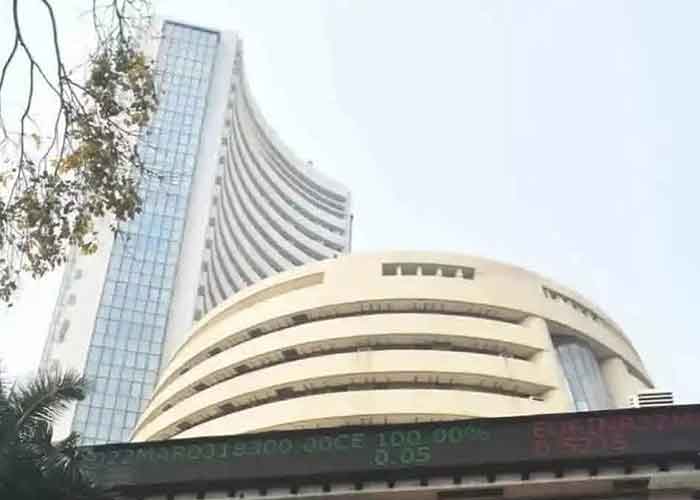
The Indian equity markets opened sharply lower on Wednesday, tracking weak global cues and aggressive FII short positioning in index futures amid escalating geopolitical tensions in the Middle East.
As of 9.28 am, Sensex lost 1,773 points, or 2.21 per cent, to reach 78,465 and Nifty eased 549 points, or 2.21 per cent, at 24,316.
Main broad-cap indices performed in line with the benchmark indices, as the Nifty Midcap 100 declined 2.18 per cent, and the Nifty Smallcap 100 lost 2.17 per cent.
All sectoral indices traded in red except Nifty IT, up 0.27 per cent. Nifty metal and realty led losses, down 3.18 per cent and 3.04 per cent, respectively. Nifty auto dropped 2.97 per cent while oil and gas dropped 2.86 per cent.
Prolonged tensions among the United States, Israel, and Iran are mounting pressure on India across its current account, inflation outlook, and currency stability.
Elevated crude prices stand to raise the country’s import bill, widen its current account deficit, weaken the rupee, stoke inflation, and trigger foreign capital outflows, said Devarsh Vakil, Head of Prime Research at HDFC Securities.
WTI crude climbed above $75 a barrel, extending a two-day gain of approximately 11 per cent. Brent traded near $81 a barrel as the widening Middle East conflict and shipping disruptions through the Strait of Hormuz kept supply risks firmly in focus.
Analysts said major global indices have turned decisively weak, reflecting a broad risk-off shift as conflict concerns deepen and crude oil prices spike.
On a sectoral basis defence, airlines, tourism, chemicals and oil-linked stocks are expected to remain in focus, as these segments are directly exposed to rising crude prices and war-driven disruptions, they said.
Elevated volatility is already evident, with India VIX at 17.13, warranting heightened caution, particularly for options traders, market participants said.
In Asian markets, China’s Shanghai index lost 1.43 per cent, and Shenzhen dipped 0.98 per cent, Japan’s Nikkei declined 4.17 per cent, and Hong Kong’s Hang Seng Index eased 2.9 per cent. South Korea’s Kospi lost 10.78 per cent.
South Korea’s Kospi had plunged over 12 per cent in early session Wednesday and temporarily halted trading after marking its worst day in decades, following a similar sell-off from the previous session.
A circuit breaker was also activated on the Kosdaq, which plummeted about 13 per cent.
The US markets ended in red overnight as Nasdaq declined 1.02 per cent. The S&P 500 lost 0.94 per cent, and the Dow Jones declined 0.83 per cent.(Agency)
 FOLLOW NOW