

New Delhi, Feb 24, 2026
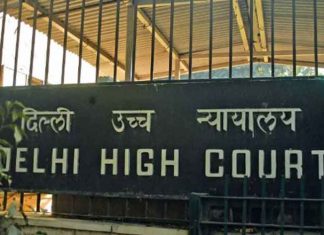
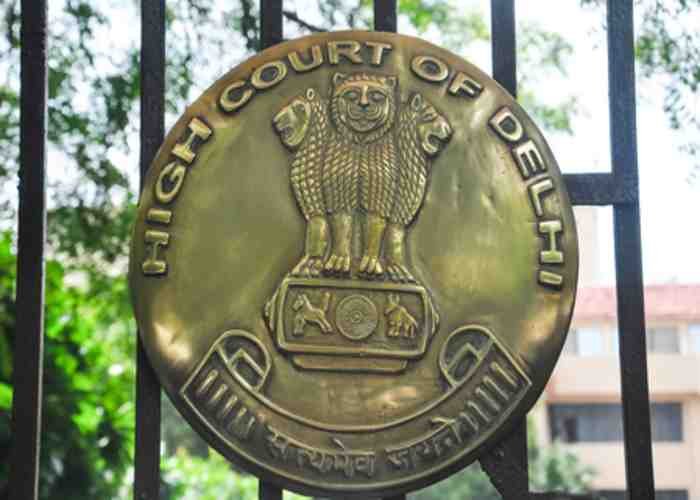
The Delhi High Court has dismissed a Public Interest Litigation (PIL) challenging a 1980 notification of the Delhi Waqf Board declaring certain mosques in Jahangirpuri as Waqf properties, observing that the petition sought to “unnecessarily rake up the past” after a lapse of 46 years and was not filed with bona fide intent.
A Bench of Chief Justice (CJ) Devendra Kumar Upadhyaya and Justice Tejas Karia refused to entertain the plea filed by Save India Foundation, which had questioned the validity of a notification dated March 24, 1980, published in the Delhi Gazette on April 10, 1980, listing several Waqf properties, including mosques locally known as Jama Masjid, Moti Masjid and Masjid Jahangirpuri.
The petitioner organisation contended that the land on which the mosques stand had already been acquired by the Delhi government in 1977 for planned development of the Jahangirpuri area under the Land Acquisition Act, 1894, and compensation had been paid to landowners.
It alleged that the structures were illegal encroachments on public land and that the Waqf notification violated the law.
Rejecting these submissions, the Delhi High Court observed that the petitioner failed to produce any material establishing the identity of the land allegedly acquired or proving that the acquired land and the Waqf properties were the same.
“We are of the considered opinion that the petitioner has unnecessarily attempted to rake up the past. The motive behind filing the writ petition also does not appear to be bona fide,” the CJ Upadhyaya-led Bench observed.
It further held that “any notification made about 46 years ago cannot be permitted to be challenged on flimsy grounds,” particularly when statutory remedies had long expired.
Referring to the scheme of the Muslim Wakfs Act, 1954, the Delhi High Court said disputes regarding inclusion of properties in the Waqf list could have been raised before a competent civil court under Section 6 of the Act within one year of publication of the notification.
“If an ordinary civil remedy is barred… entertaining a writ petition seeking declaration that the certain properties enlisted in the impugned notification are not Waqf properties, that too after 46 years, in our opinion would legally be impermissible,” the CJ Upadhyaya-led Bench said.
The judgment also took note of the petitioner organisation’s litigation history, observing that it appeared to be “habitual of filing the petitions describing them as Public Interest Litigation petitions”.
Stressing that PILs must not be allowed to become a tool for private gain or publicity-driven causes, the Delhi High Court observed that a litigant invoking PIL jurisdiction must approach the court with “clean hands, clean heart, clean mind, and clean objective.”
“The purity of the stream of Public Interest Litigation in the country should not, at any cost, be permitted to be undermined by any litigant,” the Bench said, adding that courts must ensure that frivolous petitions styled as PILs are “nipped in the bud”.
The Delhi High Court warned that the “attractive brand name of Public Interest Litigation should not be used for suspicious products of mischief” and emphasised that only genuine causes involving substantial public interest deserve judicial intervention.
Concluding that the PIL neither disclosed bona fide public interest nor legal grounds to reopen a decades-old notification, the CJ Upadhyaya-led Bench dismissed the writ petition.
“For the reasons aforesaid, we are not inclined to entertain the instant petition, which is hereby dismissed along with pending applications,” it ordered.(Agency)
 FOLLOW NOW