

Thiruvananthapuram, Feb 24, 2026
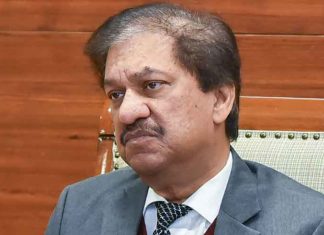
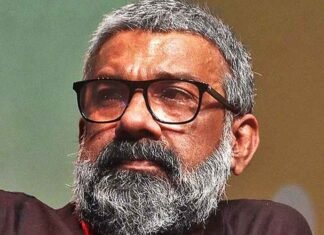
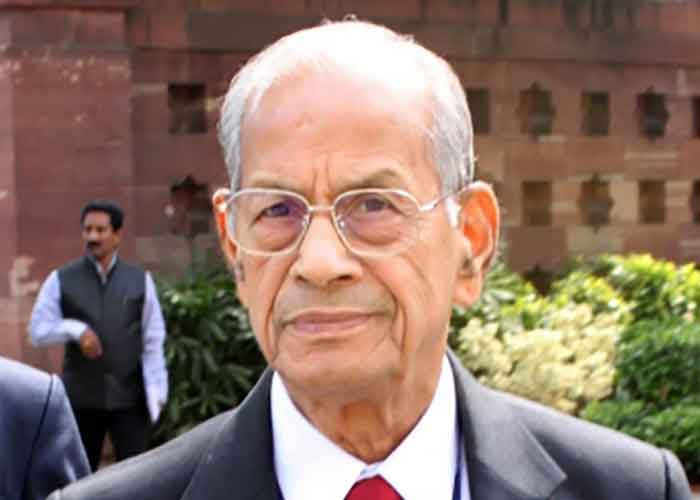
Veteran technocrat and former Konkan Railway Chairperson E. Sreedharan on Tuesday unveiled a revised design for a semi high-speed rail corridor across Kerala, promising faster execution, lower costs and minimal land acquisition compared to existing proposals.
The new plan, covering the Thiruvananthapuram-Kannur corridor, also brings Pathanamthitta and Malappuram onto the alignment.
Sreedharan said trains under the proposed system would operate at speeds of up to 200 kmph, enabling end-to-end travel in 3 hours and 20 minutes.
Project cost is estimated at around Rs 56,500 crore. Briefing the media, Sreedharan said one-third of operational energy costs can be saved as power would be generated by the company itself.
“High-speed railway is a service organisation”, he said, adding that ticket fares would be kept at the lowest viable levels, broadly comparable to AC chair car rates.
Passenger comfort, safety, punctuality and cleanliness would be prioritised.
Under the design, trains would halt for one minute at regular stations and two minutes at major hubs.
The alignment would largely run through elevated viaducts and tunnels, reducing the need for large-scale land acquisition and mitigating environmental concerns.
Sreedharan indicated that the revised proposal was prepared after limited progress on his earlier submission and said it would soon be presented to the Union government for consideration.
The announcement comes even as the Pinarayi Vijayan government has moved ahead with a separate Regional Rapid Transit Corridor (RRTC) proposal.
The state Cabinet has given in-principle approval for the RRTC project, envisaged broadly on the lines of rapid inter-city systems, with phased implementation from Thiruvananthapuram to Kasaragod.
Budgetary allocation has also been made for preliminary steps.
The parallel proposals underscore differing approaches to addressing Kerala’s mounting mobility challenges.
While Sreedharan’s model emphasises higher speeds and a predominantly elevated alignment to contain costs, the state’s RRTC plan is positioned as an integrated regional transit solution linking major urban centres.
With detailed project reports yet to be finalised in either case, the coming months are likely to determine which model gains policy traction.(Agency)
 FOLLOW NOW