
Islamabad, Jan 28, 2026
A rising number of people are being accused of blasphemy for digital crimes in Pakistan with the rights groups terming it as a type of “blasphemy business”, in which fabricated evidence, digitally doctored screenshots, or false witness statements are used to initiate police complaints, a report has detailed.
In December, the Lahore High Court’s Rawalpindi Bench acquitted six people who had been sentenced to either life imprisonment or death in a digital blasphemy case.
The court found that prosecution did not establish any credible connection between the accused and the alleged online material, Niala Mohammad, Director of Research for Afghanistan and Pakistan at the Centre for the Study of Organised Hate and Cecil Shane Chaudhry, the South Asia Deputy Team Leader at Christian Solidarity Worldwide wrote in a report in Centre for the Study of Organised Hate.
In its observations, the court mentioned about increasing “blasphemy businesses,” noting the growing use of fabricated or unverified digital content to implicate people in capital offences.
The targetted people, mostly from religious minority or low-income communities, are pressurised to pay intermediaries to avoid prosecution, quash cases or hold talks with complainants and clerical authorities. This marks a shift from opportunistic blasphemy accusations to systematic entrapment operations conducted by organised crime networks that use these provisions for extortion.
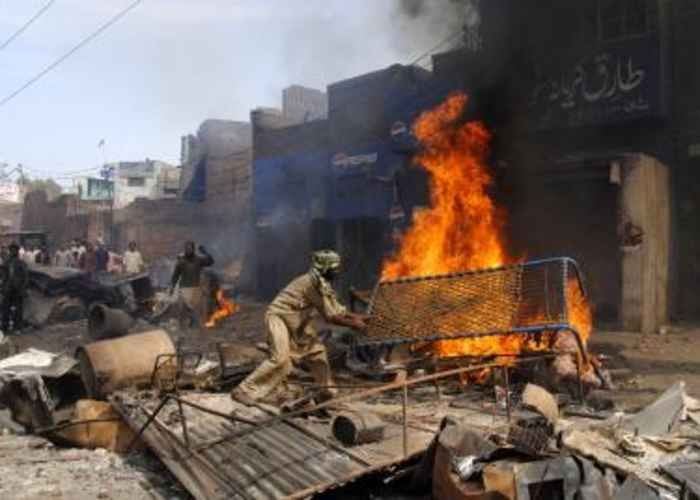
A Centre for the Study of Organised Hate report stated, “Pakistan’s blasphemy laws, especially Section 295-C of the Pakistan Penal Code, which mandates a death sentence for insulting the Prophet Muhammad, along with other perceived offences, have produced a high-risk environment where even an unsubstantiated allegation can result in arrest, mob violence, or extrajudicial killing.”
“At least 104 people have been killed extrajudicially following blasphemy allegations between 1994 and 2024. In this climate, the business of blasphemy thrives, and the allegation itself holds such destructive power that it becomes a tool through which lives can be threatened, upended, or permanently altered,” it added.
Rights groups and victim advocates highlight the involvement of actors with ties to religious groups and in some cases, complicity from individuals within the Federal Investigation Agency (FIA).
FIA officers have allegedly lodged complaints without forensic verification, accepted screenshots at face value, or acted on anonymous digital tips. Private online vigilante groups with connection to extremist groups like the Tehrik-e-Labaik Pakistan (TLP) are at the forefront of prosecuting online blasphemy cases, the Centre for the Study of Organised Hate report stated.
Pakistan’s FIA Cyber Crime Wing charges hundreds of young and vulnerable people with blasphemy based on social media content. “In the case of Shagufta Kiran, the Christian mother of four from Islamabad was arrested in 2021 after unknowingly forwarding a WhatsApp message that contained sexually explicit material overlaid with religious text.
The arrest was carried out under both Section 295 C and Section 11 of the Pakistan Electronic and Cybercrime Act of 2016, which deals with hate speech and glorification of offences,” it added.
“Soon after, Kiran was threatened by a man who demanded money and threatened her to convert to Islam. When she and her family refused, FIA agents raided her home and detained her children.
In September 2024, following a protracted three-year trial, a court sentenced her to death after concluding that she had shared offensive content about Islam, despite her consistent denial and the lack of clarity around how the message reached her phone. She is currently on death row awaiting appeal,” the report mentioned further.
Kiran’s case showcases criminal coordination and exposes the permeability of state institutions. The existence of these networks demonstrates the weakness of investigative safeguards and the potency of blasphemy allegations as tools of intimidation.
Religious minorities in Pakistan are particularly vulnerable, with Christians, Ahmadis, Hindus, Sikhs, and Shia Muslims face both legal discrimination and societal hostility, which make them prime targets.(Agency)
 FOLLOW NOW