


Quetta, Jan 28, 2026
Human rights activist and member of Baloch Yakjehti Committee, Beebow Baloch, stated that civilians in Balochistan are treated not as rights-bearing citizens, but as a problem to be managed, with their identities reduced to a perceived threat rather than a culture to be respected.
Alongside the “dehumanisation” of Baloch civilians, the human rights activist said there exists a brutal truth of systemic neglect by Pakistani authorities.
She stressed that the resources extracted from Balochistan fuel development elsewhere, while Baloch students disappear from their classrooms, only to be returned as mutilated bodies abandoned by the roadside.
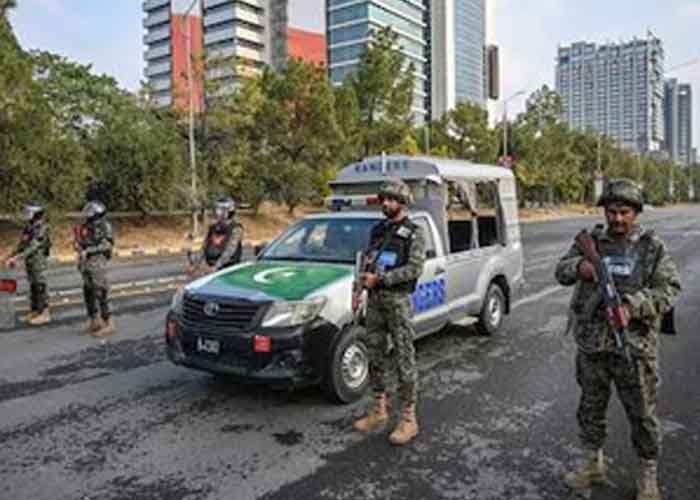
Beebow also highlighted a “ruthless pattern” of the enforced disappearance of Baloch men by Pakistani security forces across the province.
“The pattern is chillingly familiar: unmarked vehicles, faceless agents, and the state’s categorical denial of any involvement. Families are forced into endless legal labyrinths, searching for answers that rarely come. Too often, the search ends in desolation, with the discovery of a broken body in some remote wasteland, the grim signature of the ‘kill and dump’ policy. This is not merely murder; it is a message, a declaration of absolute disregard for human life,” she mentioned.
Highlighting the atrocities, Beebow said, the “deeper horror” lies in how such abuses have become normalised with over two decades of repetition, creating what she described as a “terrifying sense of acceptance”.
“What once provoked outrage is now expected. A generation has grown up knowing that a knock at the door may mean a permanent, unexplained disappearance. Courts appear unable, or unwilling, to intervene. Media attention fades. The wider public, if it notices at all, retreats behind the excuse that the situation is ‘too complex.’ The crime is not confronted; it is absorbed into everyday life, its brutality dulled by familiarity,” she stressed.
Beebow asserted that the machinery of enforced disappearance employed by Pakistani forces is now being deliberately turned toward Baloch women, describing the shift as both “strategic and devastating”.
“If men were targeted as perceived threats, women are targeted as the foundation of family, memory, and future. Their disappearance signals that all remaining boundaries have been crossed, that dehumanisation is now total. No one is safe. No line remains uncrossed,” the human rights activist noted.
“This is how life bends under a slow genocide. It does not announce itself with a sudden catastrophe, but presses down relentlessly on the ordinary,” she further added.
The global response to this crisis, Beebow said, has increasingly shifted from muted concern to silent acceptance, effectively amounting to complicity through inaction.
Questioning when repeated atrocities cease to shock the world, and what silence permits, Beebow said, confronting the reality of Balochistan means confronting a profound “question of conscience”.(Agency)
 FOLLOW NOW