SAS Nagar, Mohali, Jan 23, 2026(Yes Punjab News)
The Asian Regional Symposium on “Shaping the Future for Transforming Food Loss and Waste – Best Practices from Fruit and Vegetable Wholesale Markets in Asia” concluded successfully on 22 January in Surat, Gujarat, with wide participation from international organizations, policymakers, market authorities, researchers and industry experts.
The symposium was jointly organized by the National Council of State Agricultural Marketing Boards (COSAMB), the Food and Agriculture Organization of the United Nations (FAO), and the World Union of Wholesale Markets (WUWM), and hosted by the Government of Gujarat, Surat Municipal Corporation, and Surat Wholesale Market authorities, positioning Surat as a benchmark city for sustainable wholesale markets and circular economy practices.
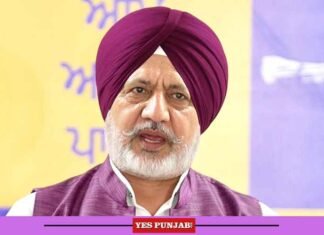
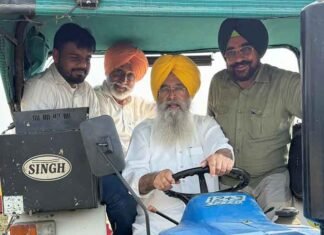
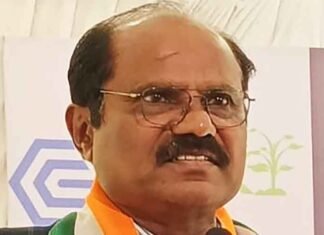
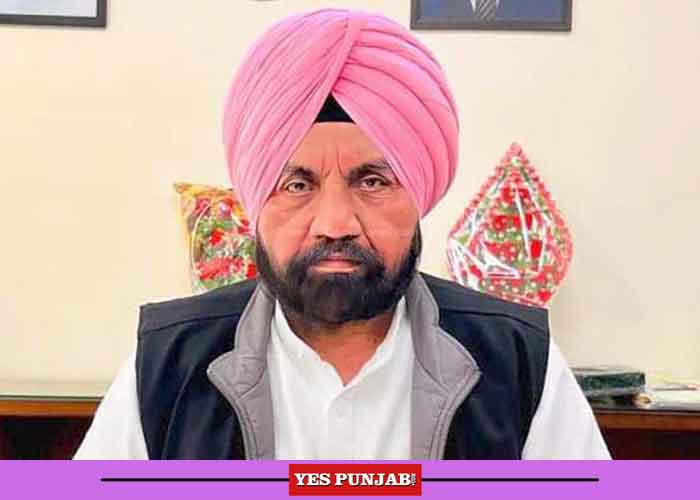
S. Harchand Singh Barsat, Chairman, COSAMB, actively participated in the symposium and emphasized the pivotal role of modern wholesale markets in strengthening food security, improving farmer incomes, and reducing food loss and waste. He stressed that wholesale markets must be treated as essential infrastructure and strengthened through improved facilities, scientific waste management systems, and adoption of circular economy practices.
The high-level conference witnessed participation from eminent dignitaries including Mr. Takayuki Hagiwara, FAO Representative in India; Ms. Valérie Vion, General Secretary, WUWM; Mr. Ma Zengjun, Chairman, Asia-Pacific Regional Group, WUWM; Mr. Daxesh Mavani, Mayor of Surat; and Mr. Sandeep Desai, MLA, Chorayasi (Surat) and Chairman, Surat APMC.
Addressing the symposium, Mr. Takayuki Hagiwara, FAO Representative in India, emphasized that modernization of fruit and vegetable wholesale markets is a “must-have investment” for food security, public health and sustainable livelihoods across Asia. He underlined that markets should be viewed as critical public infrastructure—on par with roads and electricity—rather than solely as commercial entities. Mr. Hagiwara highlighted that inadequate market infrastructure directly affects food hygiene, safety and nutrition, and called for stronger political leadership and coordinated policy action.
Mr. Hagiwara further stated that FAO is committed to supporting India and Asian countries through technical cooperation, policy dialogue and regional knowledge exchange. He stressed the need to move beyond markets alone and adopt a holistic food systems approach, integrating market infrastructure, food control, public health and consumer behavior to address food loss, waste and nutrition challenges.
The symposium focused on practical and scalable solutions such as Bio-CNG and biomethanation, advanced waste processing technologies, and digital tools for hygiene and food safety. The Surat APMC 50-TPD Bio-CNG plant, converting organic waste into renewable energy, was showcased as a successful and replicable model. Delegates also visited the fruit and vegetable market, CBG plant, and APMC processing units producing fruit pulps, juices, sauces, jams and pickles.
During the event, the Executive Body and General Body meetings of COSAMB, chaired by Sardar Harchand Singh Barsat, were held. Key decisions included approval of COSAMB’s annual budget, authorization to sign MoUs with reputed national and international institutions for market development, and upgradation of employee designations.
Concluding the symposium, Sardar Harchand Singh Barsat thanked all national and international participants for their valuable contributions. He noted that the symposium had been highly enriching and expressed confidence that the learnings would be implemented on the ground. He encouraged stakeholders to strengthen collaboration through the World Union of Wholesale Markets and reaffirmed COSAMB’s commitment to transforming wholesale markets into hubs of sustainability, climate action and resilient food systems.
 FOLLOW NOW