
Washington, October 15, 2026 (Yes Punjab News)
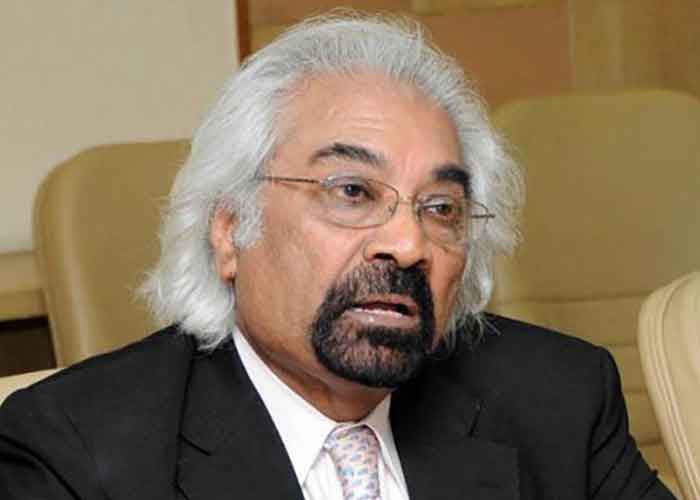
Indian Overseas Congress chief Sam Pitroda has praised the Cockroach Janta Party (CJP) and the young people associated with its movement for their courage in speaking out, saying their protests have helped galvanise sections of society and encouraged others to overcome their fear of expressing dissent.
In an interview with IANS on Thursday, Pitroda said the CJP movement should be viewed as part of a wider political and social situation in India, encompassing concerns about democracy, elections, unemployment, education, economic inequality, the representation of marginalised communities and the use of technology in political campaigns.
“Some people spoke loudly. Some spoke in bad language. Not that I approve of it, but you could see their anger. That opened up a whole lot of opportunities,” Pitroda said, adding that the movement had given courage to people who were previously afraid to speak out.
He described the protests as an expression of a broader demand for fearless opposition and public participation, crediting young people with taking up issues affecting their generation. Referring to an article he had written, Pitroda said he had called the phenomenon the “Indian Monsoon”, drawing a comparison with the “Arab Spring”.
Pitroda said the movement had brought together concerns over examination-related issues, alleged paper leaks, poor educational infrastructure, rising tuition fees, coaching classes and unemployment. He also said minorities, Other Backward Classes (OBCs), Dalits and tribal communities felt their voices were not being heard and that they were being left out of the benefits of economic growth.
On the broader political situation, Pitroda alleged that democratic institutions and civil society were being undermined and expressed concerns about media control and the functioning of the electoral system. He referred to allegations and doubts surrounding voter registration, electoral rolls, electronic voting machines and the handling of ballot-related material, while acknowledging that people held differing views on these issues.
He also questioned the distribution of the benefits of economic growth, arguing that rising wealth among a small section of society had not translated into adequate job creation or improved living standards for ordinary people. He cited concerns about school infrastructure, mid-day meals, teacher attendance and primary healthcare, and questioned why large numbers of Indian students continued to go abroad for higher education.
Pitroda said he believed the country faced a choice between a future centred on religion-based ideology and one built around secularism, democracy, diversity and inclusion. He said young people involved in the protests appeared to place greater emphasis on equality across religious and caste lines.
Asked whether the protests could lead to a change of government, Pitroda said the decision rested with the people of India. He clarified that he was not demanding judicial intervention but regarded it as one possible course, adding that the courts would have to decide how to respond to concerns raised about democracy and elections.
On the Opposition’s request to meet the Chief Justice of India (CJI), Pitroda said he respected both the leaders’ wish to meet the Chief Justice and the latter’s decision not to meet them. He said the CJI was entitled to follow the process he considered appropriate and that submitting written representations or approaching the courts was a normal course of action.
Pitroda also said he believed the CJP would make a greater contribution by remaining an independent watchdog or pressure group rather than aligning itself with Congress leader Rahul Gandhi. He suggested that young activists could press any government to improve schools, primary health centres, teachers’ training and other public services, irrespective of which party held power.
Responding to reports that the CJP was an offshoot of the Aam Aadmi Party (AAP), Pitroda said he had no information to confirm the claim. He described the activists as young people who appeared capable of articulating their views and navigating a complex political system, while noting that they could make mistakes.
“We should be proud of our young people,” he said, adding that he wished more people would speak up and fight for causes they believed in. He invoked Mahatma Gandhi’s emphasis on courage, saying people had to stand up for their beliefs if they wanted to be heard.
Pitroda also expressed support for YouTuber Dhruv Rathee’s right to be in India and express his views, describing him as a bright young man with a large following. Asked whether Rathee and other activists, including Abhijit Dipke and Saurabh Das, should join Congress, he said the decision rested with them and the party, while reiterating the importance of independent voices working on public issues.
On foreign policy, Pitroda questioned whether India currently had the international influence necessary to mediate between Russia and Ukraine. He argued that India should have a more substantial role in global affairs and questioned the gap between the country’s self-image as “Vishwa Guru” and the attention he believed it received internationally.
He also said Rahul Gandhi’s response to a note by Elon Musk on the spectrum issue should not be interpreted as an endorsement of granting Musk a licence. According to Pitroda, the question of whether India should permit Musk’s satellite services was a matter for telecom policy, with the government needing to assess how best to provide services to people at a lower cost.
On the influence of Musk and George Soros on politics and policymaking, Pitroda said they could exert some influence but did not run nations. He said any decision on whether India should engage with Soros should depend on the purpose and merits of a proposal, including its potential benefits and consistency with policy.
Asked whether Rahul Gandhi would become Prime Minister in 2029, Pitroda said the decision would be made by the people of India.
Pitroda, 85, also said he did not know when he would next visit India, citing reduced travel and health concerns affecting his wife. He added that video communication allowed him to continue working without travelling as frequently as before.
 FOLLOW NOW