
Washington, June 9, 2026
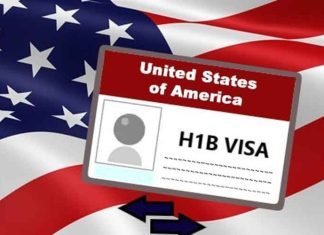
The federal judge who struck down the Trump administration’s $100,000 H-1B visa payment requirement said the central issue in the case was not immigration policy but whether the executive branch had imposed a tax without congressional approval.
In a 42-page ruling, US District Judge Leo T. Sorokin concluded that the administration’s H-1B policy amounted to an unauthorised tax and exceeded powers granted to the President under federal immigration law.
“The Court finds that the Policy imposes a tax on H-1B petitions without the requisite delegation by Congress,” Sorokin wrote. “There are no statutory powers authorizing Defendants to implement a $100,000 tax on H-1B petitions.”
The Trump administration had argued that the fee was part of the President’s authority to impose restrictions on the entry of foreign nationals into the United States.
Sorokin rejected that argument, finding that immigration laws cited by the administration did not grant the executive branch the power to levy taxes.
“These considerations preclude reading INA §§ 212(f) and 215(a) as delegating Congress’s exclusive power to tax,” he wrote.
The ruling repeatedly emphasised that while presidents possess broad authority over immigration matters, those powers have constitutional limits.
“While ‘the Executive has broad discretion over the admission and exclusion of aliens, . . . that discretion is not boundless,’” Sorokin wrote.
He added that such authority “may not transgress constitutional limitations” or “the statutory authority conferred by Congress.”
The judge also rejected the government’s argument that the $100,000 charge could be treated as an immigration restriction rather than a tax.
“Taxes are not ‘restrictions,’” Sorokin wrote while analysing the administration’s interpretation of presidential powers under the Immigration and Nationality Act.
A significant portion of the ruling focused on the US Constitution’s assignment of taxing authority to Congress. Sorokin noted that Congress may delegate some taxing powers to executive agencies, but only when lawmakers clearly express that intention.
According to the ruling, the immigration statutes cited by the administration authorise the President to impose restrictions, rules, regulations and limitations on the entry of foreign nationals, but contain no language explicitly authorising the creation of a new tax.
The judge also found that federal agencies implementing the policy had exceeded their own statutory authority.
“There are no statutory powers authorizing Defendants to implement a $100,000 tax on H-1B petitions,” the ruling stated.
Beyond the constitutional questions, the court determined that agencies failed to follow required rulemaking procedures and did not adequately justify the dramatic increase in costs imposed on employers seeking H-1B workers.
The ruling ultimately declared the policy unlawful and vacated it nationwide.
“The Policy implementing the Proclamation is declared unlawful and is VACATED in its entirety,” Sorokin wrote.
The decision is likely to be closely watched beyond the H-1B programme because it addresses the limits of presidential authority in immigration matters and reaffirms Congress’s exclusive constitutional role in taxation.(Agency)
 FOLLOW NOW